The book The Arab Archive: Mediated Memories and Digital Flows talks about the practice of archiving to preserve important material that was collected during the Arab Spring. Since the end of 2010, the Arab world has been the protagonist of revolts, revolutions, and the territory that interested journalists, televisions, and film-makers. During the uprising of the revolution, ordinary citizens started to collect footage and pictures of what was going on in the streets. This collection of digital material spread in the rest of the world even before tabloids could release the news. The power of digital media is to spread at such a quick pace that enables a large number of people from all over the world to witness what is going on.
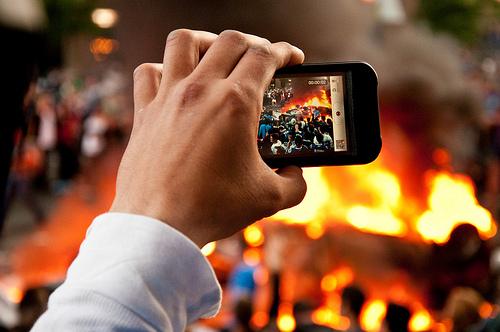
The dominant narrative in global media quickly became about Revolution 2.0 and the affordances of new mobile, interconnected digital technology to enable an unaffiliated network of filmers to upload their videos for both those only a few blocks away and audiences watching thousands of miles from the scene.
Wael Ghonim, Revolution 2.0: The Power of the People Is Greater than the People in Power: A Memoir, Boston: Houghton Mifflin Harcourt, 2012.
Where does this material go, once the revolutions are over? That is when the practice of archiving becomes important.
Archiving means collecting all the material and preserving it for future needs. An example is the 858 archive, which gets its name from the number of hours of footage that it contains. It is also known as the Archive of Resistance. It could be a tool used “to build new histories for the future”. Archives produce collections of evidence of what happened, in order to not let people forget the protests, the violence, the atrocity that people had to go through.
“858 includes images of protest and images of violence carried out by the forces that attacked us, but it also hosts images of the everyday, images of the day after and the day before. Images that don’t yell, but entail the ingredients to help us prepare for a better world”
Della Ratta, Dickinson, Haugbolle.
After doing some research I found out that I cannot apply this interesting reading to my movement. Unfortunately, the Sardine movement does not have an archive. The sardine supporters definitely own footage from when they participated in protesting, but this footage does not show anything that has not been reported by tabloids nor that shows something extremely relevant that we have not heard about.
 Sardine