Collective action is the set of processes of how to get to the change-oriented goal that a movement has. It requires people to make difficult choices and to be part of more established group identities or ideologies. Connective action is based on sharing content across media networks, and it allows a bigger involvement of people due to the power of social media to spread information quickly and efficiently. An example of connective action is the use of #Hashtags, which is a way to share information in a comic and silly way, but that is effective to reach a lot of people.

The logic behind connective action is that digital media is the main coordinator and people are brought together by personal ideas that are shared on social media. The key feature that changes in the two is the way action is organized. For example, a collective action movement has a structured leadership, a top-down one. Connective action does not have a clearly identified leader, everyone contributes to the organization of protests or events. The logic behind connective action is that digital media is the main coordinator and people are brought together by personal ideas that are shared on social media. The key feature that changes in the two is the way action is organized. For example, a collective action movement has a structured leadership, a top-down one. Connective action does not have a clearly identified leader, everyone contributes to the organization of protests or events.
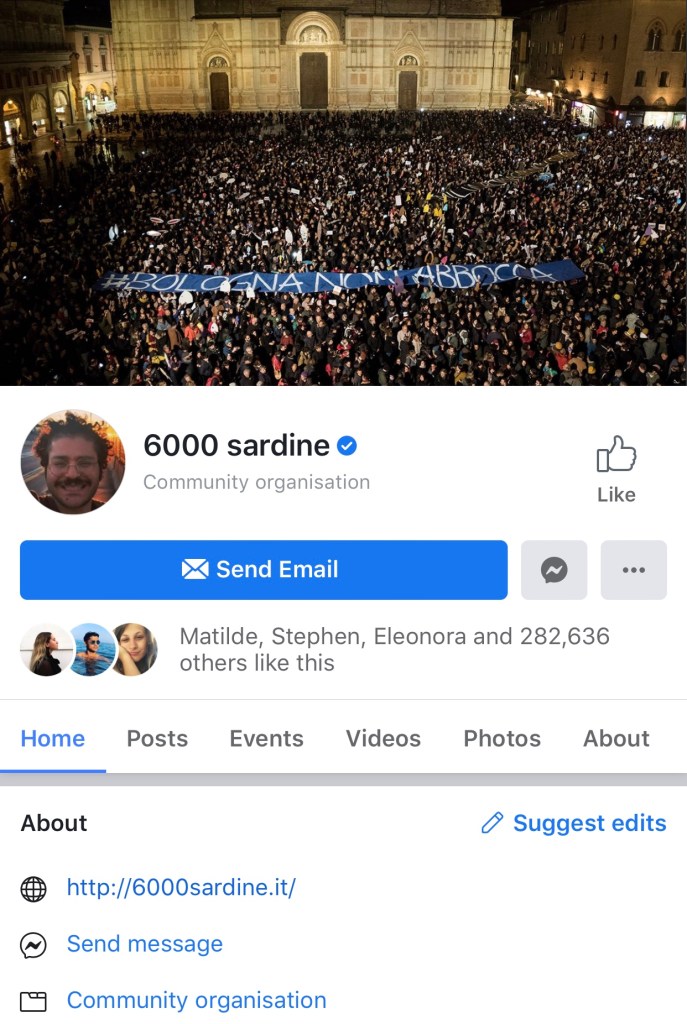
Sardine is a connective action movement because Facebook is the organizing agent. It allows them to plan their next steps. The first event that took place in Bologna counted over ten thousand people in Piazza Maggiore. All those people were informed and connected by social media. The hashtag #sardine reaches the trending chart on twitter every time Sardine plan a protest in an Italian square, which means that a lot of people are active on social media when Sardine does something. The use of hashtags is an example of a personal action frame, which implies a sense of inclusion of people and a tendency to develop lifestyles.
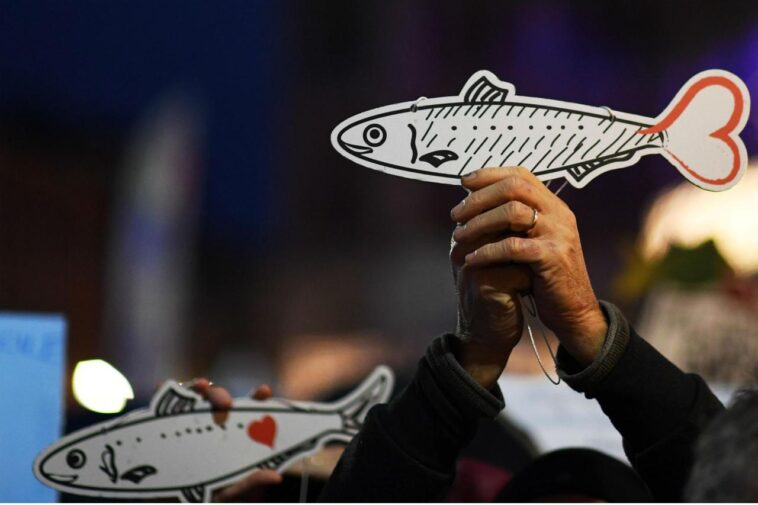
Sardine does not have a specific leader, all actions are planned by consent of the majority of the participants of the movement. Although they have an exponent, Mattia Santori, who does not directly sardine he represents them, for example on tv programs or public interviews. Sardine does not identify themselves to a specific political party, and political parties are out of the protests. One important rule that must be followed to be in Sardine is that the participants of the protests cannot show any affiliation to a political party not show logos connected to politics. Their logo is the sardine fish, and they do not want it to be associated with a specific political party or exponent.
 Sardine